A painting can stretch beyond a rectangle without leaving painting behind. Hard Art at MoMA PS1 brings that question into rooms where canvases hang, fold and reach toward the floor. The exhibition follows abstraction by Black artists in the United States from 1969 to the present, bringing more than forty artists into a conversation across generations. It opened November 5, 2026, and remains on view through March 15, 2027, in Long Island City, Queens.
When the surface leaves the wall
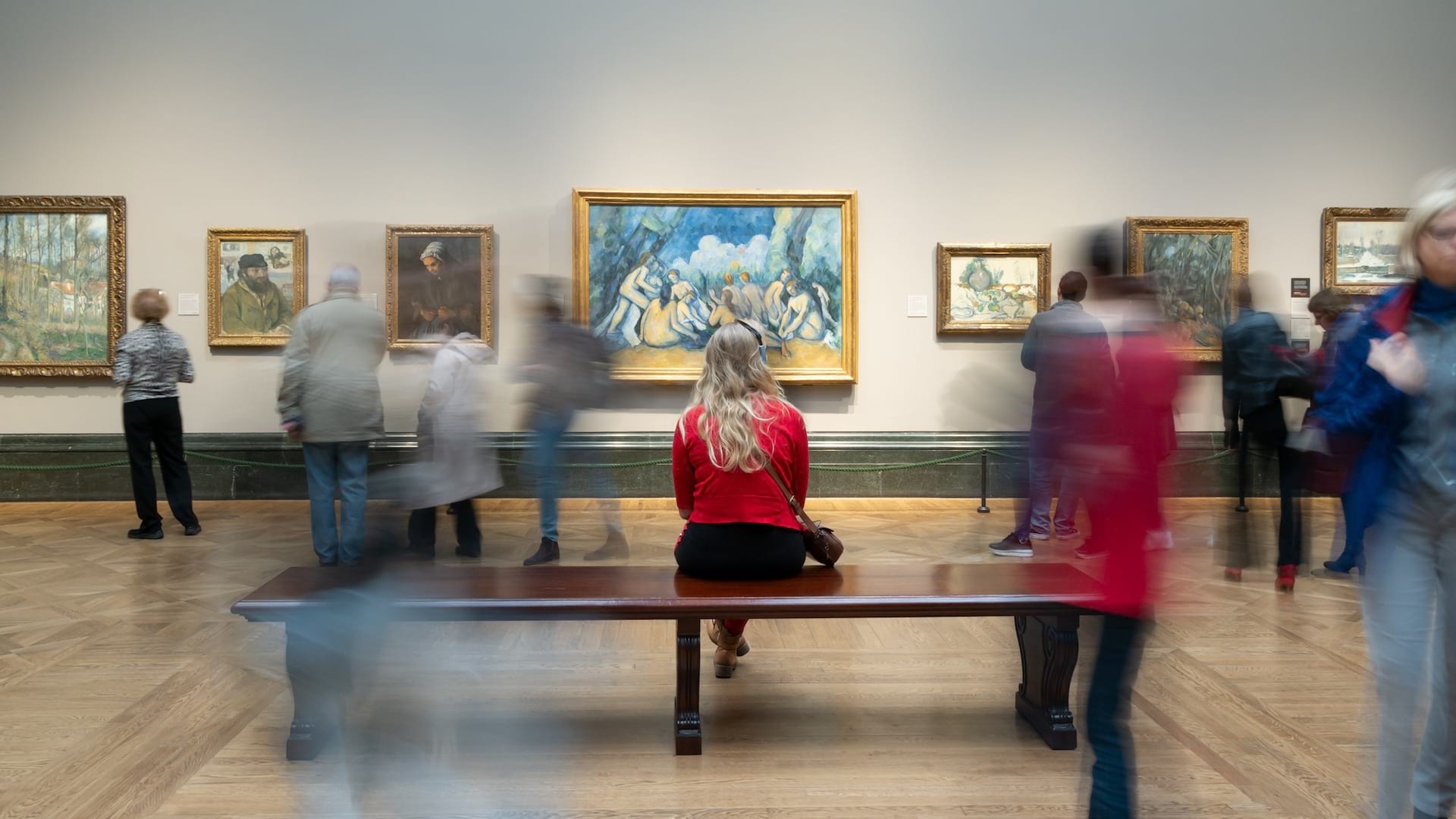
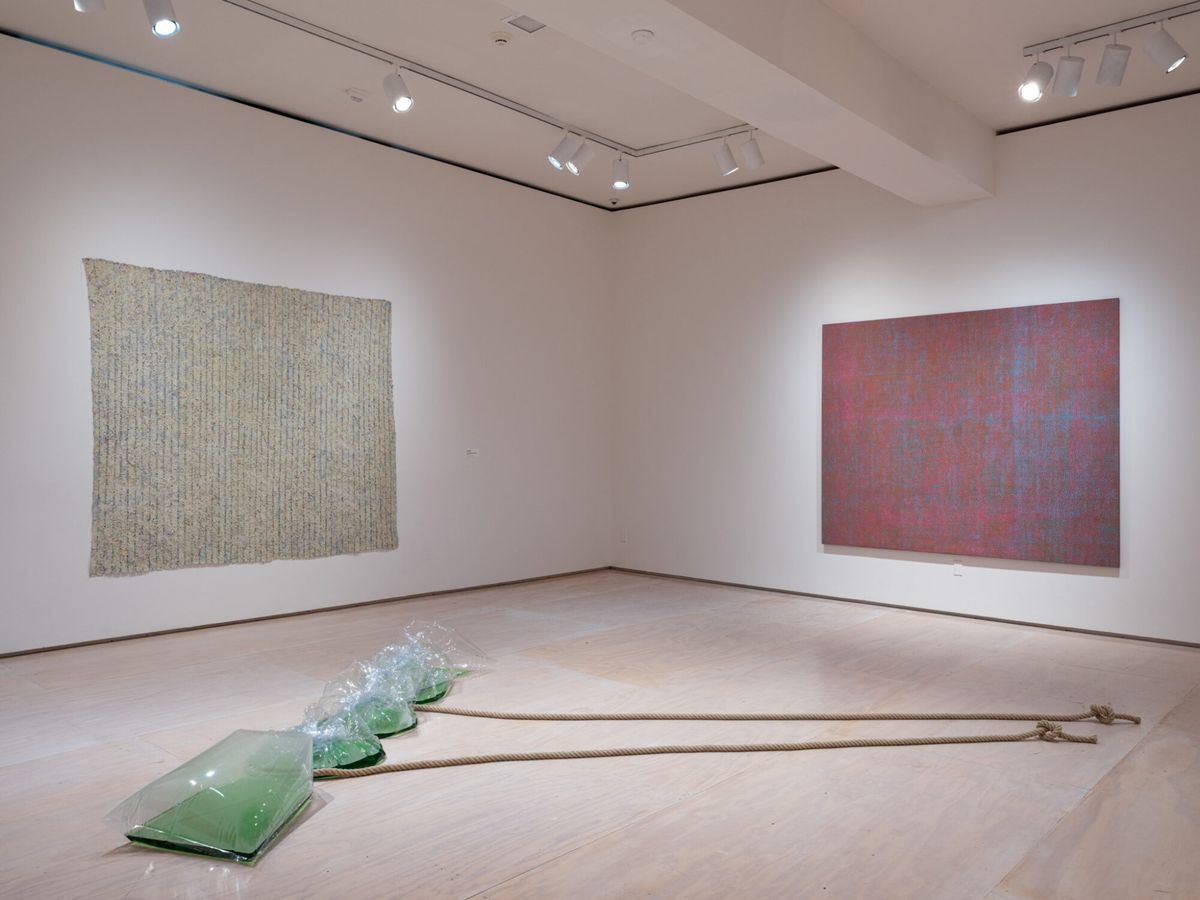
Kris Graves’s current installation photographs show how much the space around a work contributes to it. In the room pictured on the cover, paintings by Howardena Pindell share the gallery with Senga Nengudi’s Water Composition (green), dated 1970/2021. Its green forms rest low on the floor, drawing the eye away from the wall. The works occupy the room at different heights and ask for different viewing distances.
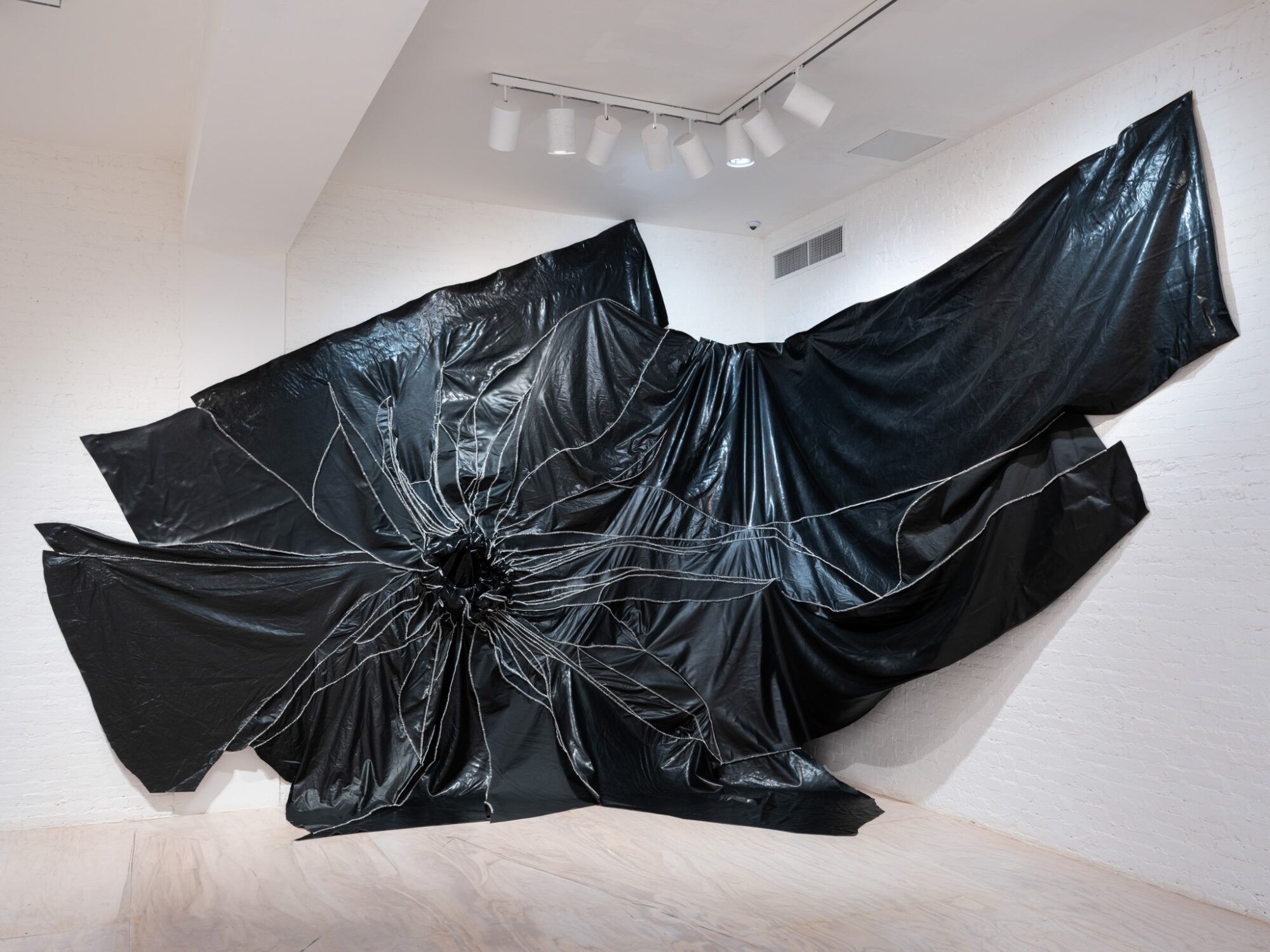
Rodney McMillian’s Succulent (2010) presents another kind of surface: a broad black form hangs in deep folds against a white wall. Light catches its ridges while the recesses stay dark. Even in a photograph, the gap between the wall and the hanging material becomes part of what you look at.
Color can change the shape of a room
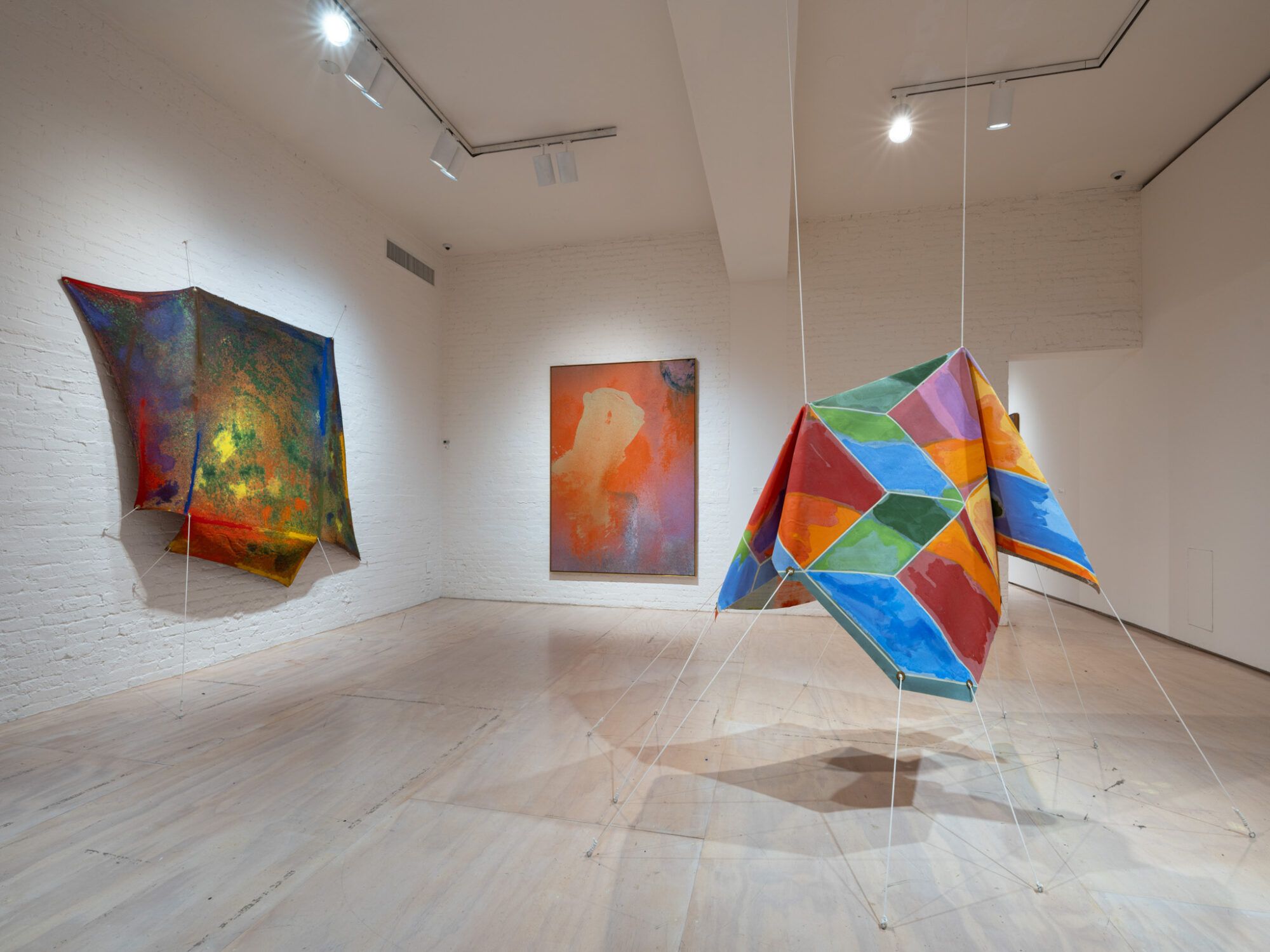
A nearby installation view brings together Joe Overstreet’s Untitled (1972), Peter Bradley’s Supersqualo No. 1 (1972) and Overstreet’s We Came from There to Get Here (1970). A suspended, multicolored work pushes into the open floor while other paintings remain on the walls. Look at the edges as well as the color: the support and hanging arrangement change the outline of the picture.
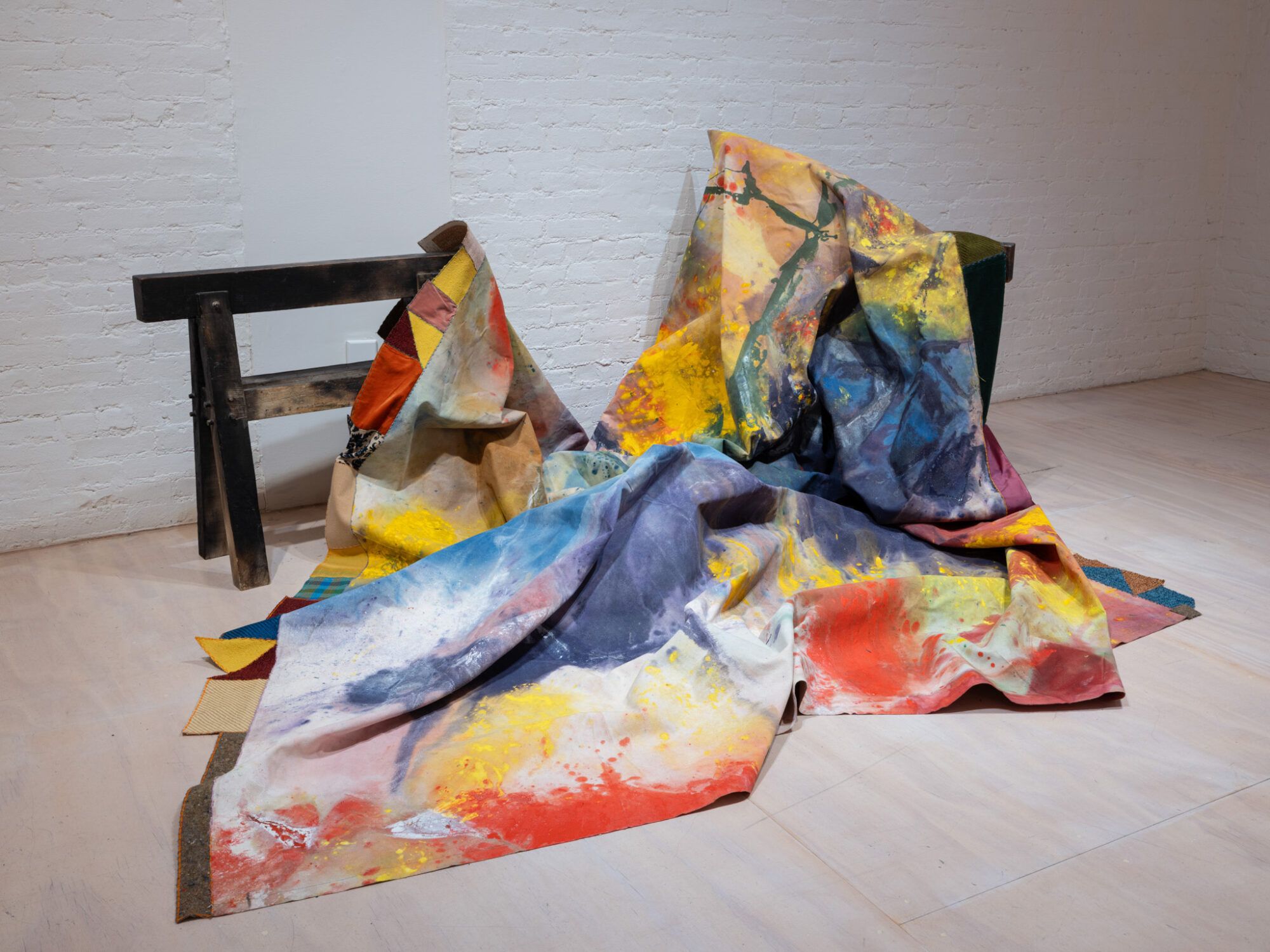
Sam Gilliam’s “A” and the Carpenter I (1973) makes the fold especially visible. Painted fabric rises over a support and spills toward the floor. Bands of yellow, blue and red bend with the material instead of staying in one flat plane. These installation photographs offer a useful reason to see the works in space, rather than treating a reproduction as the whole object.
Planning a visit before the year ends
Hard Art is at MoMA PS1, 22-25 Jackson Avenue in Long Island City. Admission is currently free for everyone; the museum offers ticket reservations through its visit page. Regular hours are noon to 6 p.m., with a 10 a.m. opening on Saturdays. It is closed Tuesdays, Wednesdays, Thanksgiving, Christmas and New Year’s Day. Check the current visit page before traveling, especially during the holiday weeks.
The exhibition is organized by Connie Butler with Sheldon Gooch, with research and support by June Kitahara. This is a preview based on the museum’s material and its current installation photographs, not an account of an on-site visit. Before making pictures yourself, check the museum photography rules and the signs beside individual works.