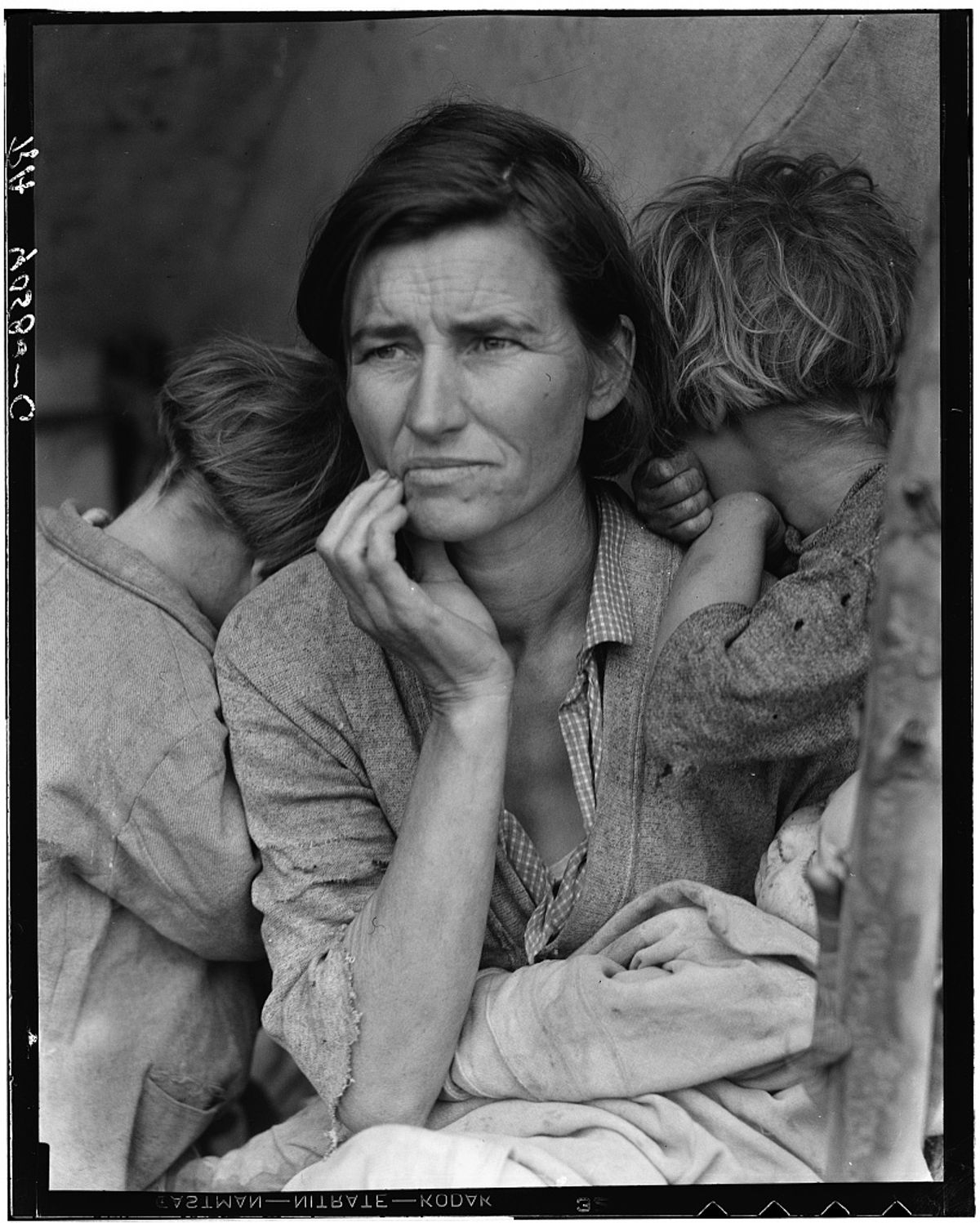
A hand against a cheek. Two children turned away from the camera. An infant across a lap. Dorothea Lange’s Migrant Mother is so familiar that it can seem self-contained, a photograph with everything already settled inside its frame.
The archive makes that certainty harder to maintain. Lange photographed Florence Owens Thompson and her children in a series at Nipomo, California, in March 1936. The familiar portrait is one view from an encounter, not the encounter itself.
A wider frame asks different questions
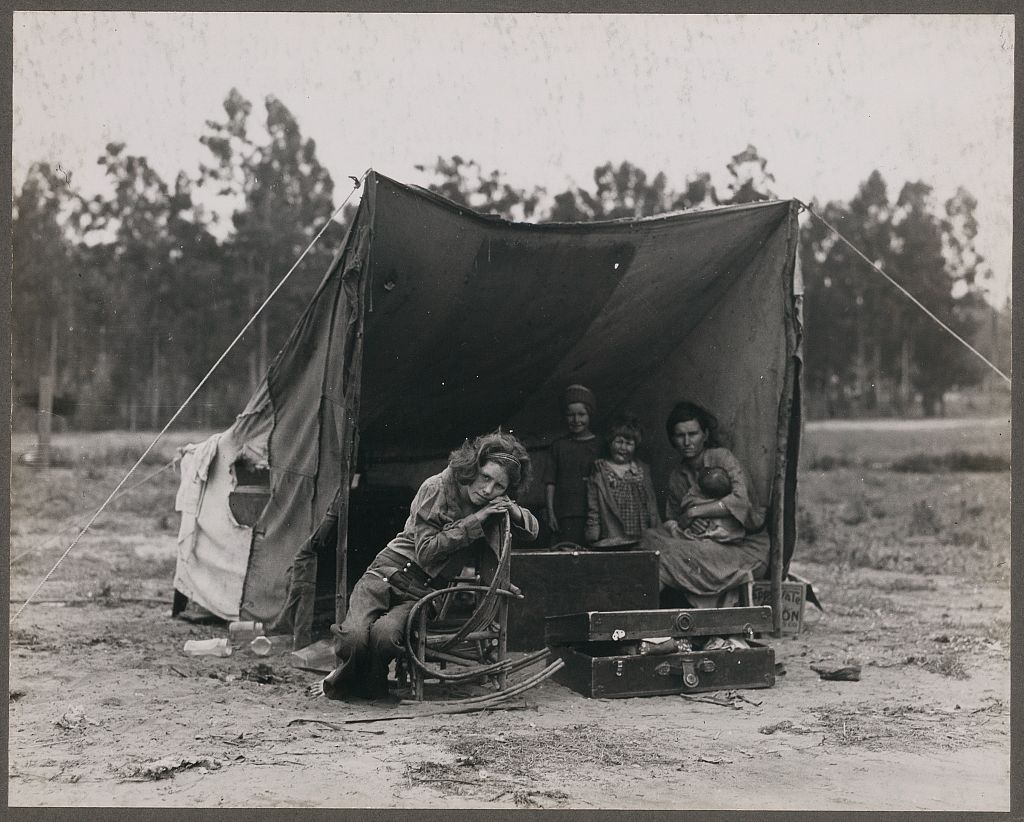
The shelter changes the reading. Cloth, supports and the space around the family become visible. Instead of concentrating almost entirely on a face and the children’s gestures, the viewer has to consider an environment. The closer portrait gives emotion a tight visual structure. The wider picture makes room for material details.
Neither frame gives us access to everything the people pictured knew or felt. A gesture is visible; a private thought is not. That distinction is easy to lose when a photograph has acquired decades of explanation around it.
An archive is not a ready-made shooting order
Seeing several photographs together can encourage another shortcut: treating their catalog numbers as a storyboard. The Library of Congress cautions that the negative numbers were assigned later and do not establish the order in which Lange exposed the pictures. Its image guide also identifies photographs held outside its own collection.
We can compare framing without inventing a sequence. Saying that one image feels more intimate than another is a visual judgment. Saying that Lange moved closer at a particular moment requires evidence about the order of the exposures. Those are different claims.
Even the famous image has a material history
The catalog record for the familiar portrait notes that the negative was retouched in the 1930s to remove a thumb from the lower-right area. That detail belongs with the picture. It reminds us that an image circulating as a historical document also has a history of printing, alteration and selection.
A responsible caption need not become an essay, but it should preserve what matters: the photographer, the people identified, the place, the date and any relevant qualification. Repeating a dramatic story without checking it can make a caption more memorable while making the photograph less understood.
Let the person remain a person
An icon can stand for a period so effectively that the individual inside it becomes harder to see. Using Florence Owens Thompson’s name is a small way to resist that compression. Looking at the related pictures is another. The family occupies a place, and the archive contains choices and gaps.
The point of returning to the series is to widen the questions. What did this frame include? What was outside it? What does the record actually establish? A familiar photograph can become worth looking at again when we stop asking it to tell the whole story alone.
The same attention to what comes before and after a picture can change how you read a photobook.
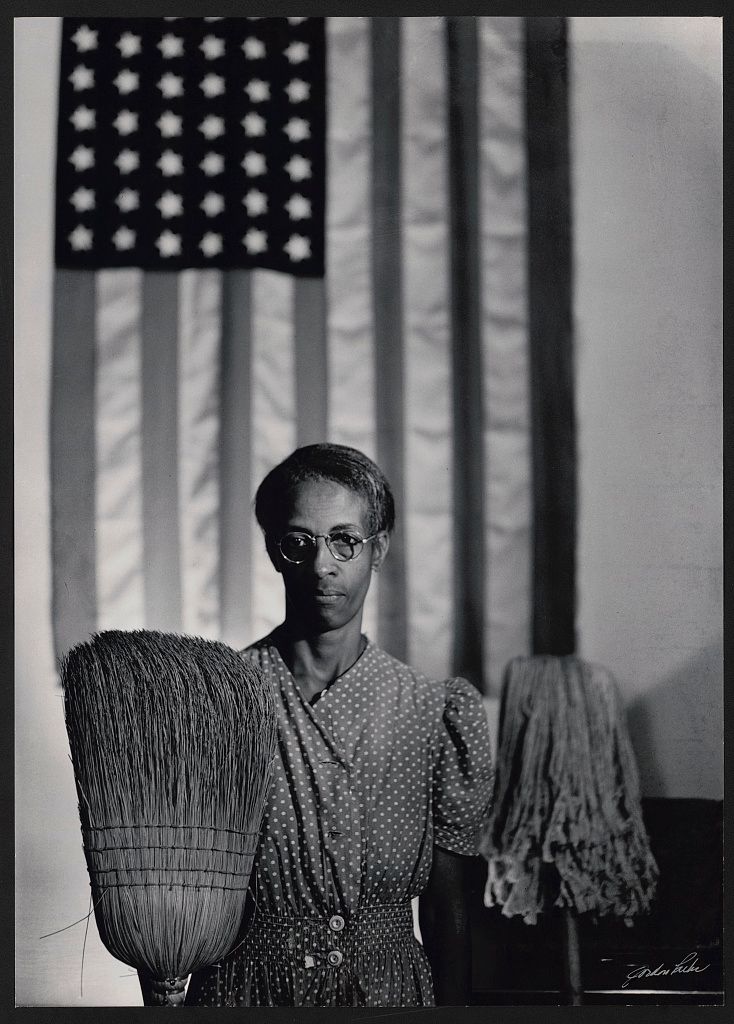
For another FSA series that reaches beyond one famous portrait, see Gordon Parks’s photographs of Ella Watson.