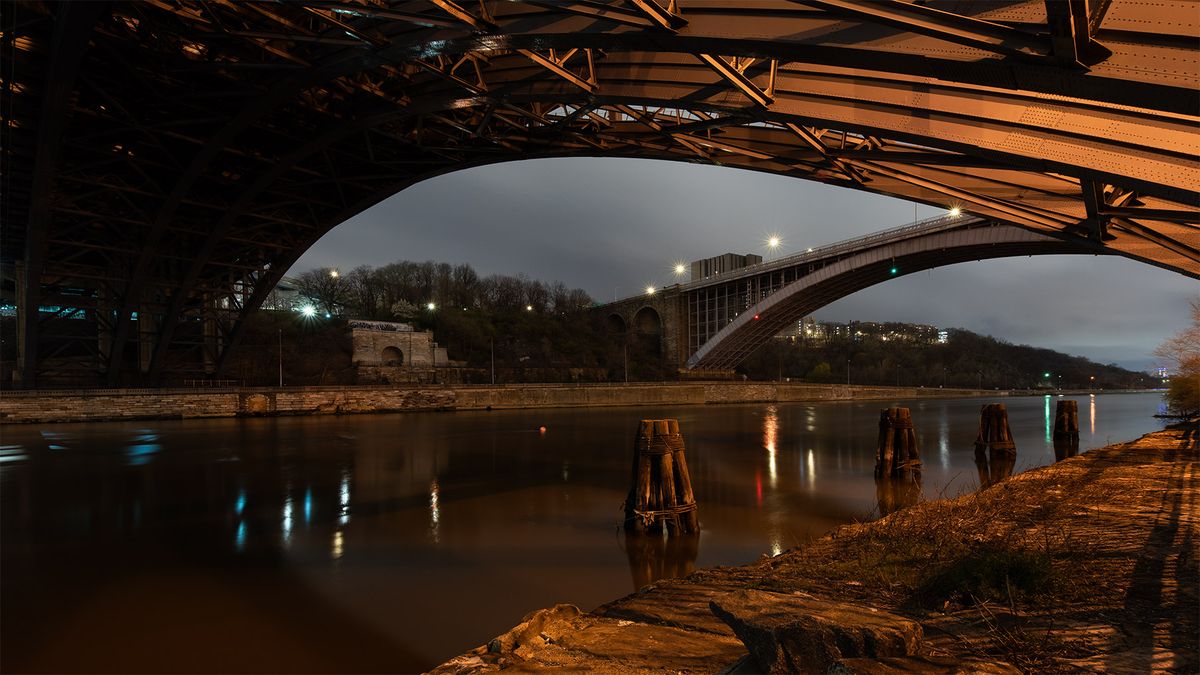
In Duane Bailey-Castro’s photograph of the Alexander Hamilton Bridge, the view starts beneath a span. Dark beams cover the top of the picture and leave a pale arch visible farther out. Your eye has to travel under the nearer structure to reach the one beyond it. The bridge shapes what you can see before you’ve even looked at the whole photograph.
Where the bridge meets the sky
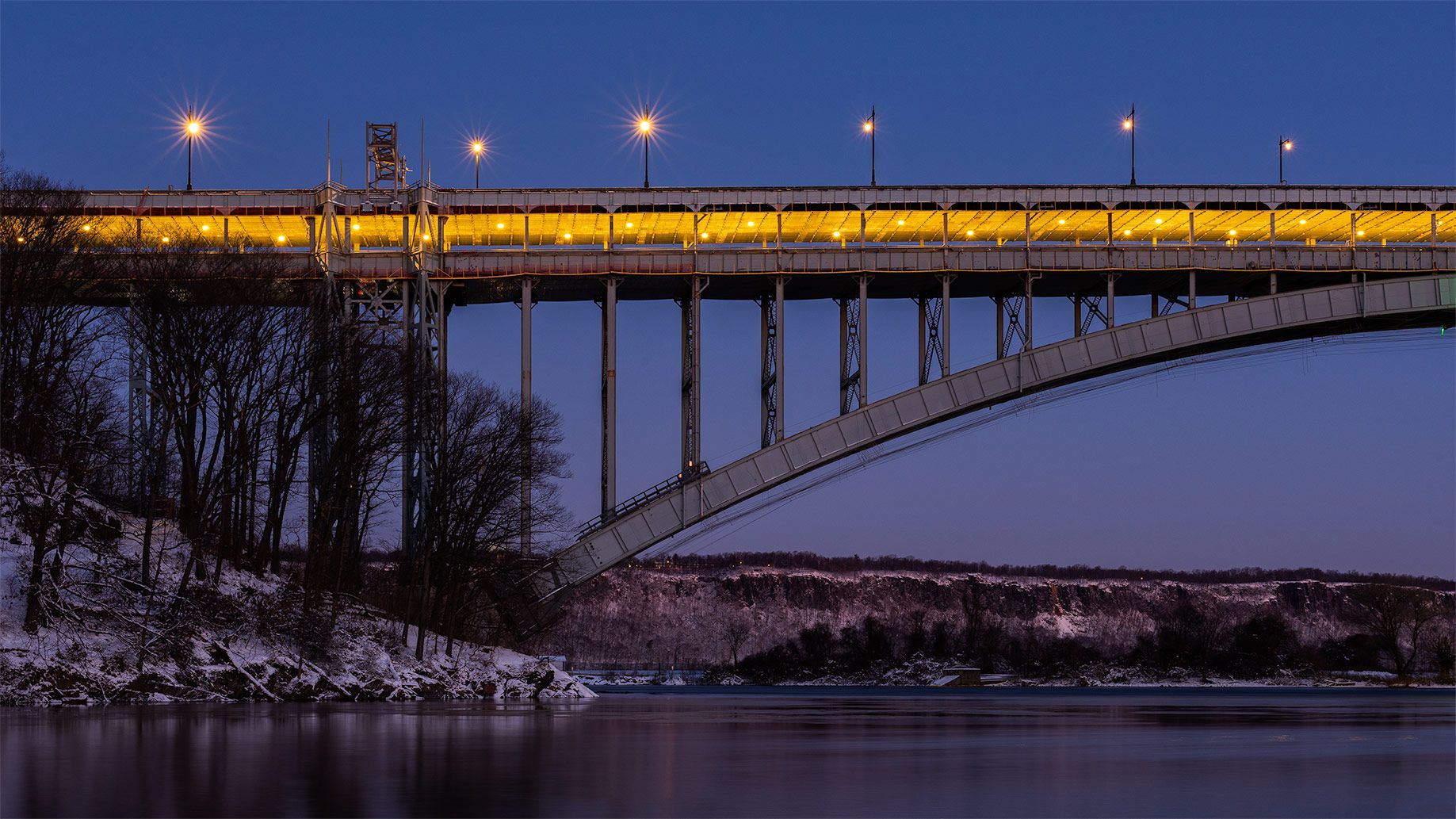
Bailey-Castro has spent years photographing the Harlem River and its crossings. He describes the Harlem River Bridges project as a way to draw attention to the Bronx and Upper Manhattan. In his picture of the Henry Hudson Bridge, a row of warm lights pulls the eye straight across the upper part of the frame. Below that line, the steel supports angle down toward the river. The photograph lets you read the bridge as both a level crossing and a structure reaching down to the banks.
What the river reflects
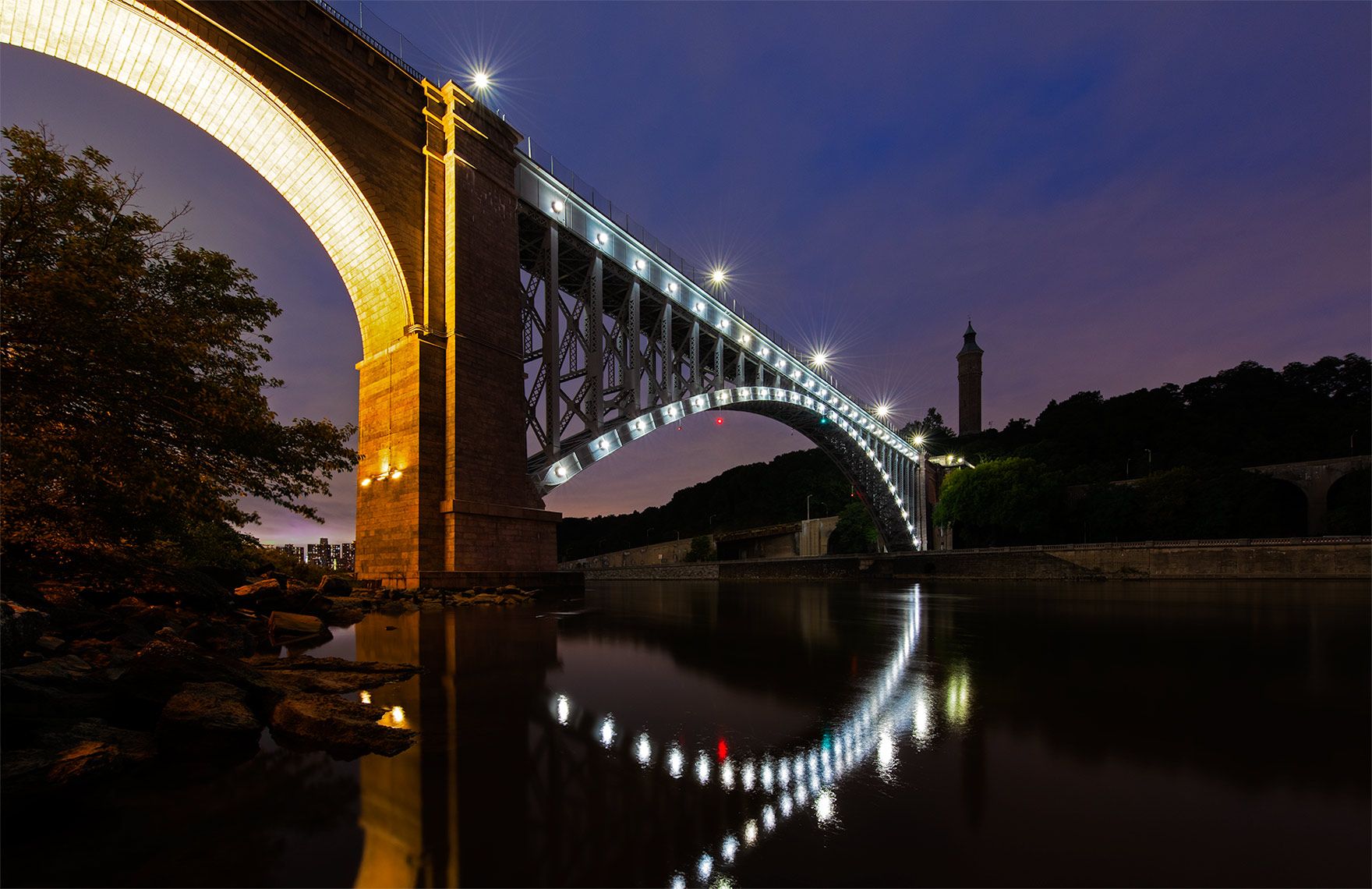
At High Bridge, the arches on the left meet their own reflections. The nearest one makes an almost closed loop. Farther along, the openings get smaller and the light becomes a thin line. The river helps complete a shape that is only half there above the surface.
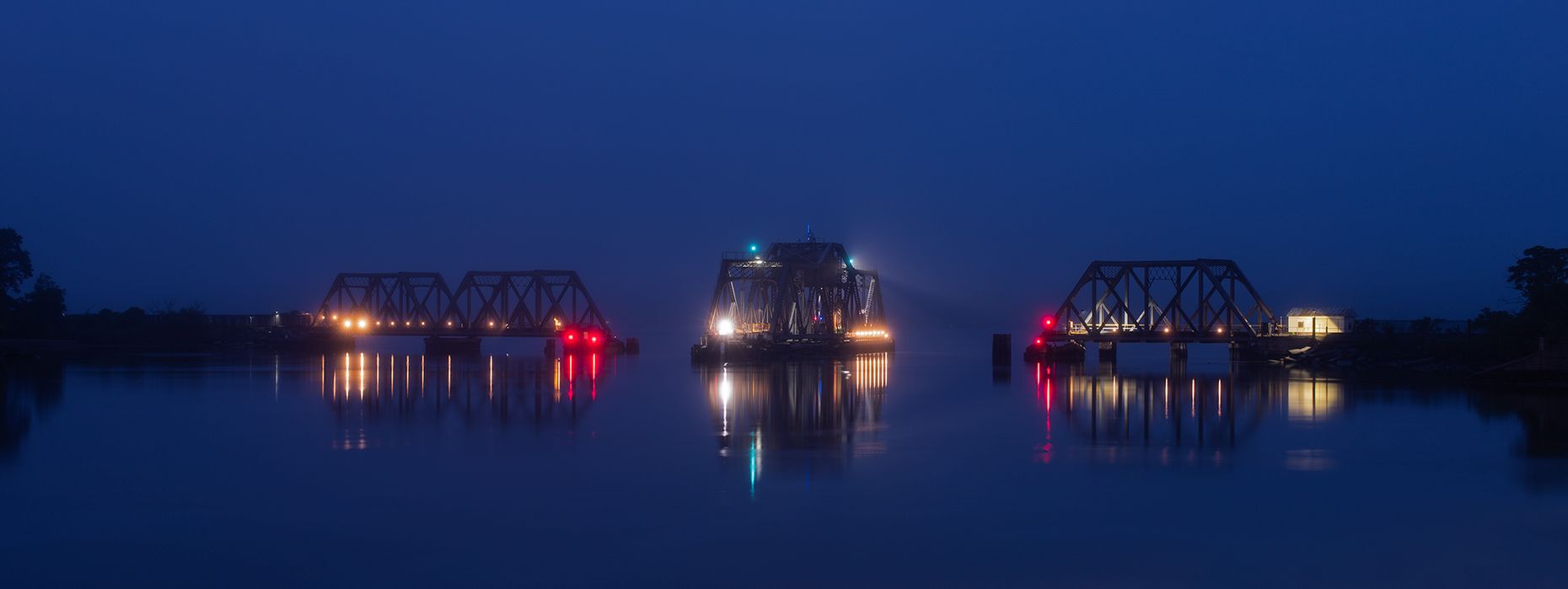
The Spuyten Duyvil Bridge photograph gives the water a different role. The bridge is mostly a dark line against a blue evening sky. Small red and orange lights mark where the structure sits. Their reflections stretch down into the river and take up more room in the frame than the lamps themselves.
Bailey-Castro is a 2026 En Foco Photography Fellow. The fellowship exhibition, Archives of the Image Becoming, runs through November 21 in the Bronx. These four photographs come from his own project portfolio.