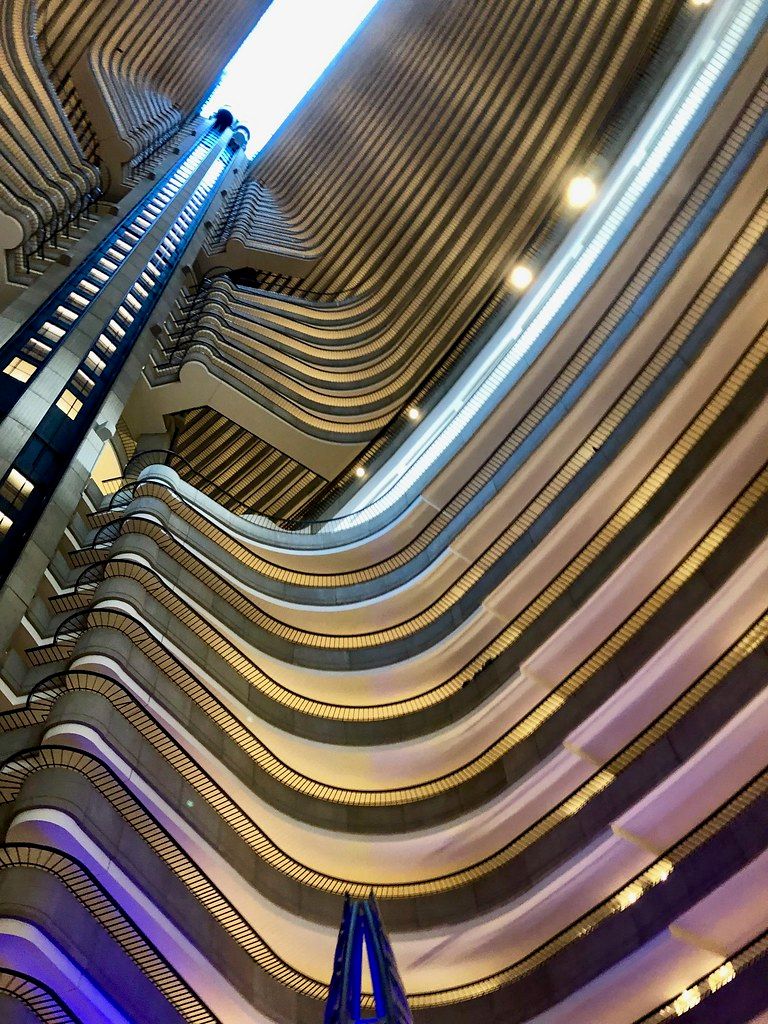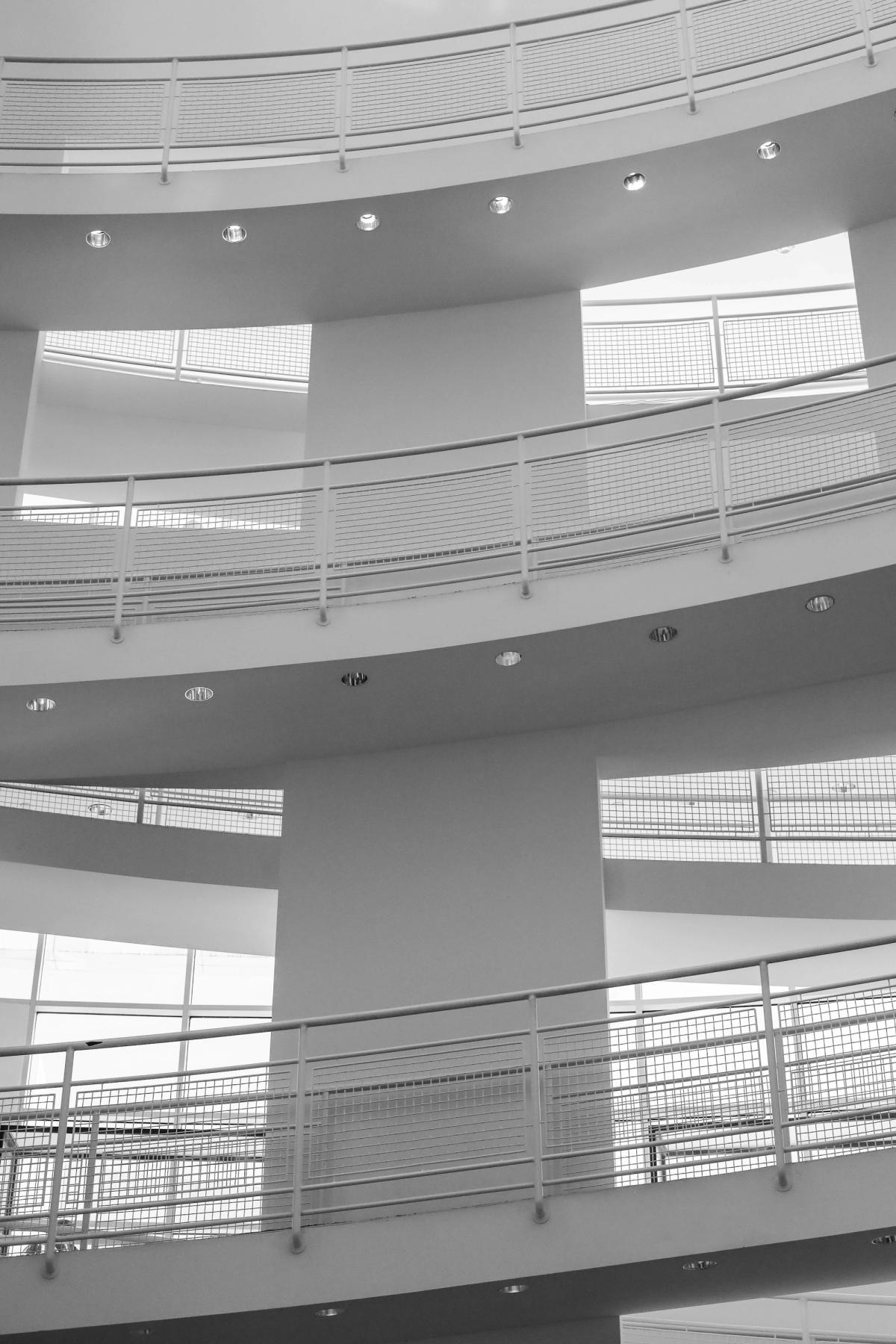
At the High Museum of Art in Atlanta, a photograph of the ramps can leave the paintings out entirely and still give you plenty to look at. White rails repeat across the frame. Curves overlap. Windows cut through the walls, turning the spaces between floors into part of the view.
The building is worth a little time of its own. Richard Meier designed the High’s Stent Family Wing, which opened in 1983. Renzo Piano’s expansion followed in 2005. Their approaches share a white exterior, but the experience of light and movement changes as you move through the campus.
The ramps make you look across the room
Brandon Griggs’s black-and-white photograph, shown above, picks out the atrium’s layers. A railing becomes a line, then another line appears behind it. The absence of color makes the repetition easy to follow; the small variations in gray keep the white walls from becoming one flat surface.
A ramp does something a staircase rarely allows: it keeps the route through a room visible for longer. Here, the route is also something to look at. You can follow the curve with your eye before anyone walks into the frame.
The museum’s history of the High identifies Meier’s building as the Stent Family Wing. Knowing that name helps when you are reading the museum map: the architecture comes from different stages of the institution’s growth, rather than a single design built all at once.
The same white space can hold a lot of color
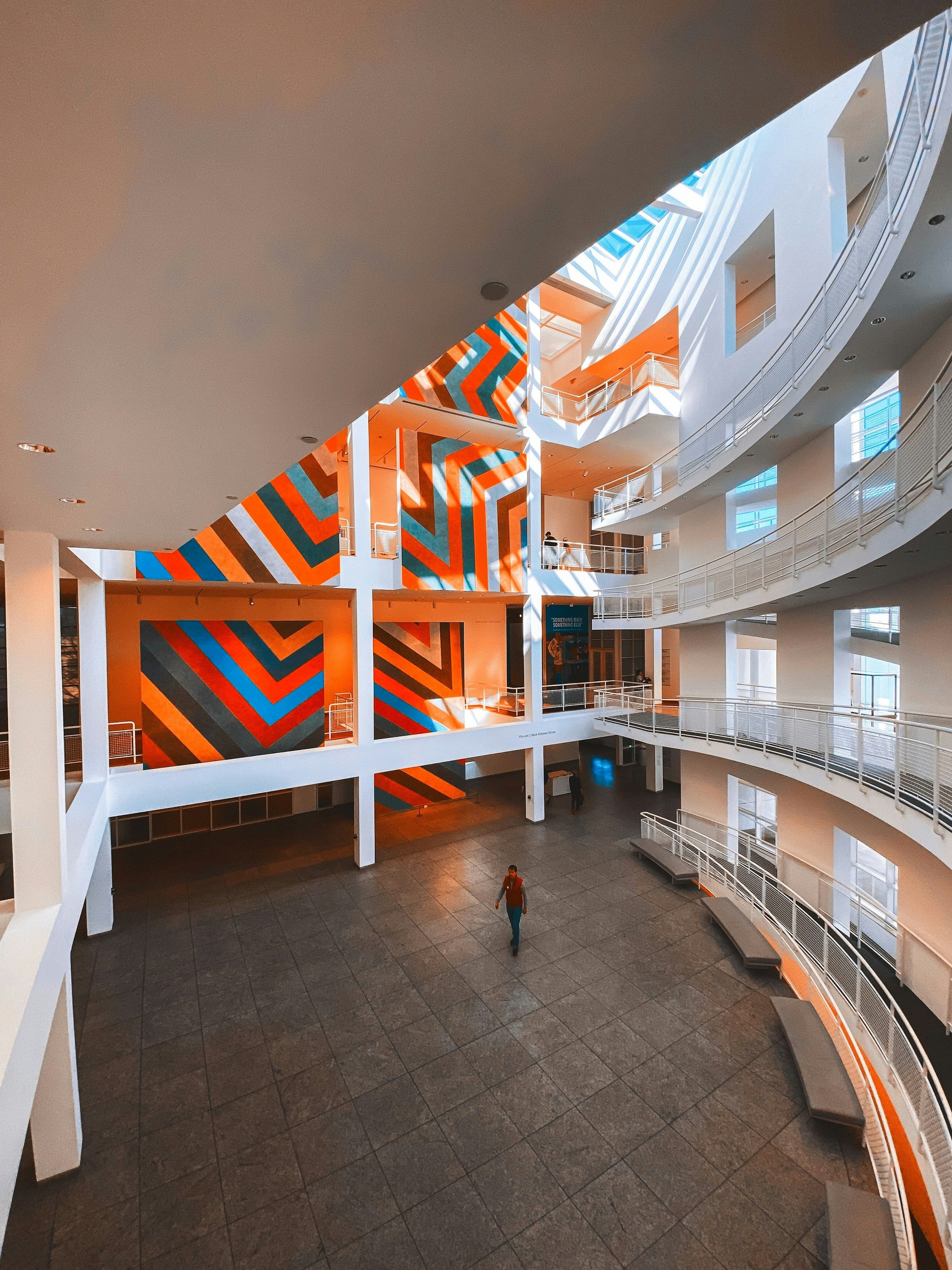
Ranjith Alingal’s photograph makes a useful counterpoint. Orange and blue surfaces dominate one side of the atrium, while the white ramps pull the eye around the other. The building supplies the structure; the installation changes the mood.
The photograph was published in 2020, so it should not be read as a promise of what is on the walls today. It does show how much the same architectural frame can change. A brightly colored installation and a nearly monochrome view of the railings can belong to the same place.
Piano brings daylight in from above
The later expansion takes a different route. Renzo Piano Building Workshop’s project account describes three buildings arranged around Sifly Piazza, with gallery spaces connected to the existing museum. The square gives the campus an outdoor center rather than treating the new galleries as a single large addition.
Over the collection galleries, north-facing light scoops control how daylight enters. The roof has nearly 1,000 skylights. Instead of relying on a large window at the end of a room, the system brings light down through the ceiling.
The Renzo Piano Foundation’s project archive records the work and credits the collaboration with Atlanta architects Lord, Aeck & Sargent. Its drawings and construction photographs are a useful next stop if you want to understand the roof beyond the finished gallery interior.
Leave time between the galleries
A visit does not need to become an architecture lesson. Leave a few minutes to look across the atrium, notice how the ramps meet the windows, and spend time in the piazza between gallery stops. Those transitions are part of what makes a museum feel like a place rather than a sequence of rooms.
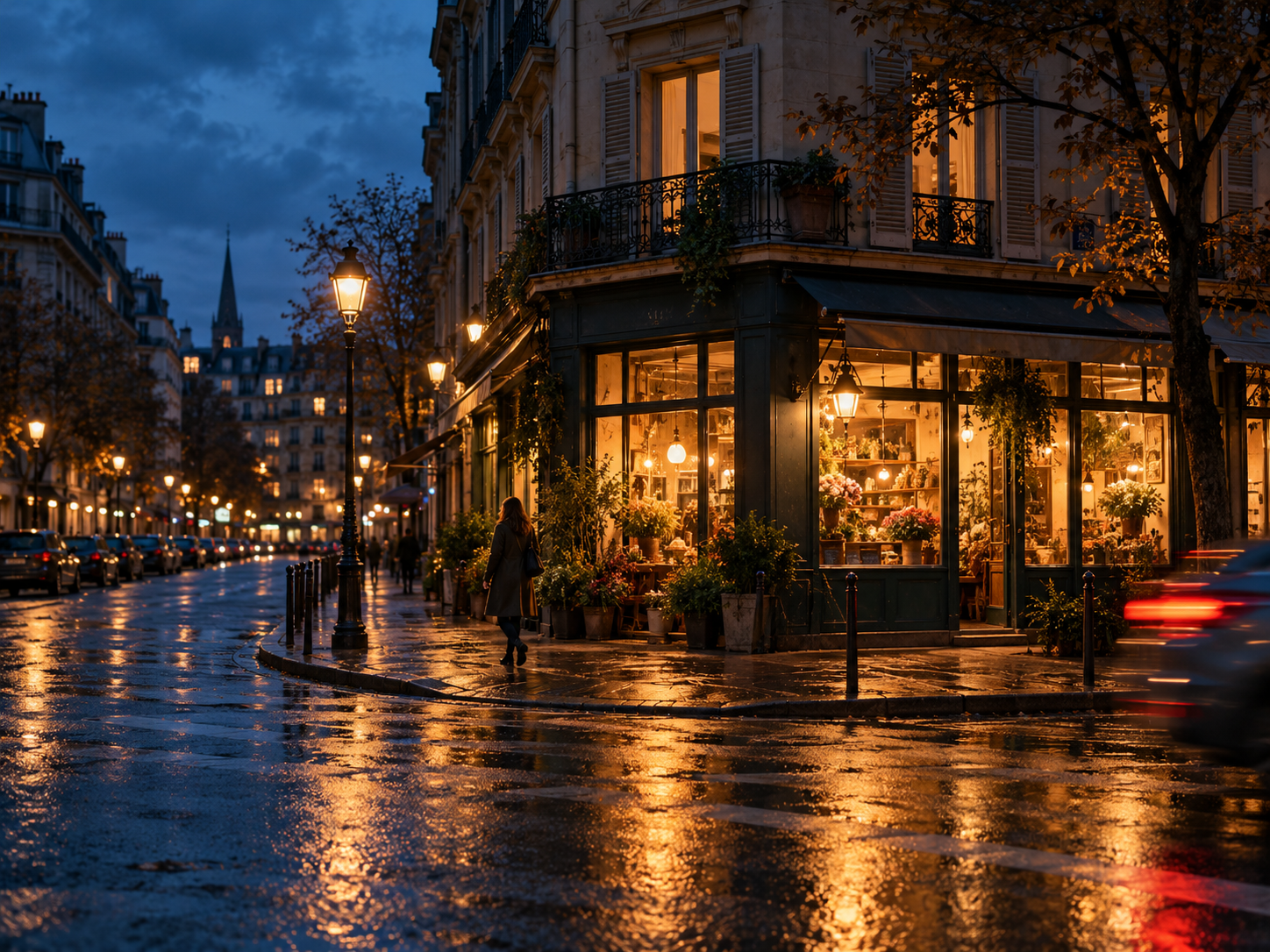
If you are also making photographs, the question is the same one that comes up in our guide to taking better photos at night: where is the light coming from, and what does it reveal? Here, the answer can be a window, a roof opening, or a bright wall reflecting light into the space beside it.
Before you go
The High is at 1280 Peachtree Street NE in Midtown Atlanta. Check the museum’s visit page for current hours, tickets, maps, and accessibility information rather than relying on an old photograph or itinerary.
The museum permits casual personal photography in its collection galleries, subject to restrictions. Special exhibitions may have different rules. Read the current photography policy before bringing equipment or planning a shoot; personal visitor photography is not blanket permission for commercial use.