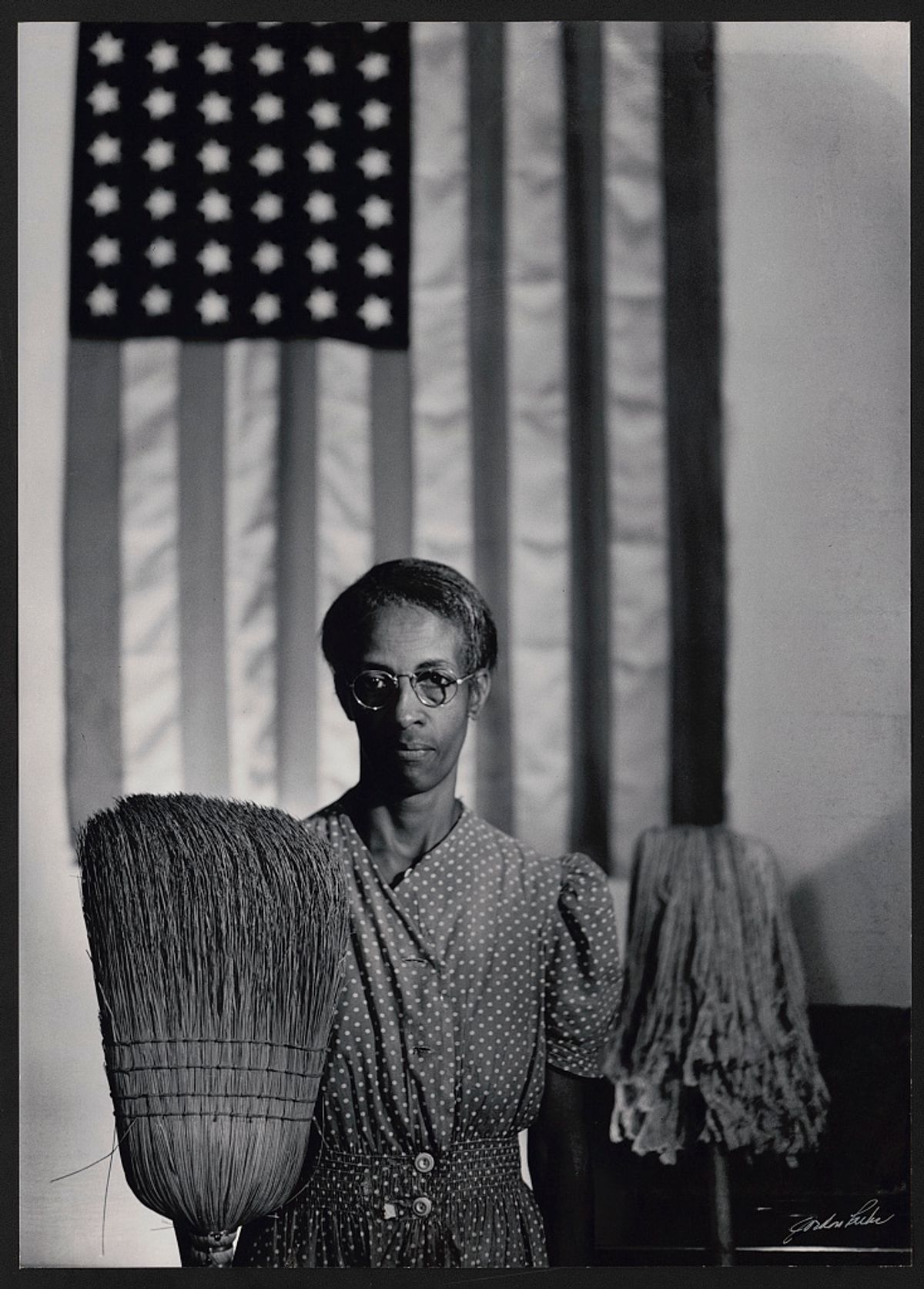
In 1942, Gordon Parks photographed Ella Watson standing before an American flag with a broom and a mop. Watson cleaned government offices in Washington, D.C., where Parks was working for the Farm Security Administration. The portrait became known as American Gothic. The rest of the series brings us into rooms the flag portrait leaves outside the frame.

At home, Parks photographed Watson helping dress her grandchildren. She is seated and turned toward a child. The camera takes in the room around them, giving a small task enough space to unfold.
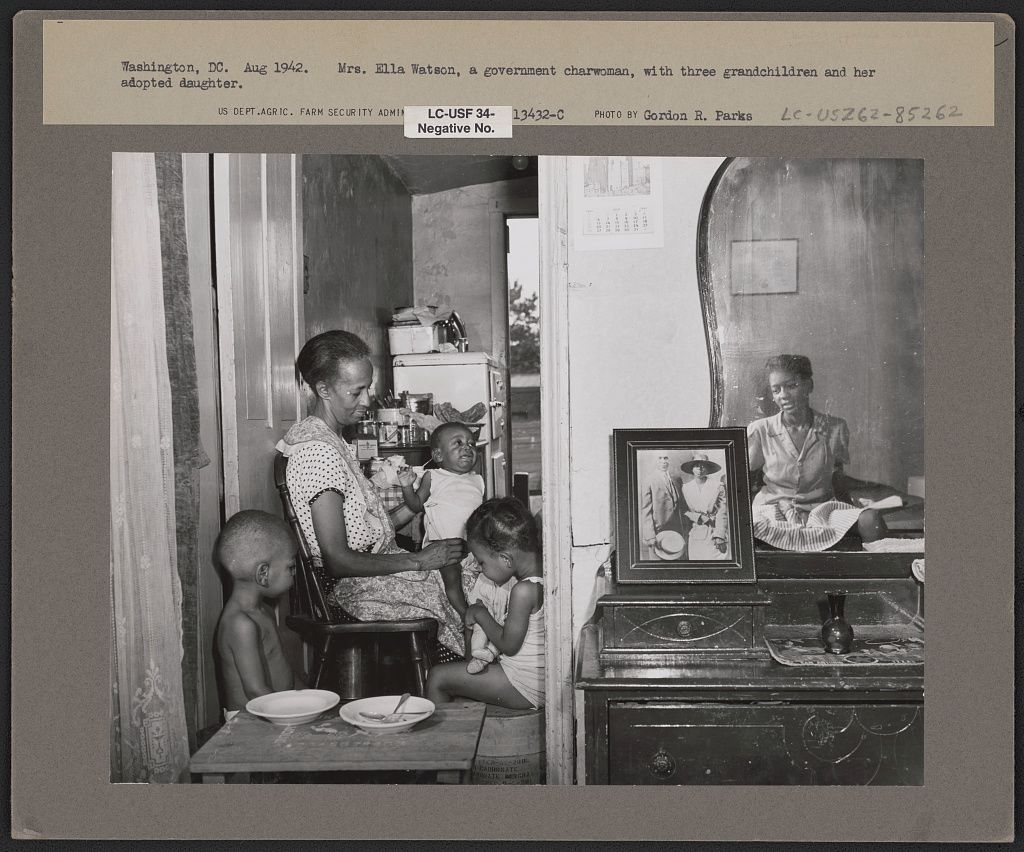
The group portrait puts Watson, her adopted daughter and her grandchildren in one frame. The doorway and the furniture stay in the picture. You can see how close everyone sits before you start noticing what’s around them.
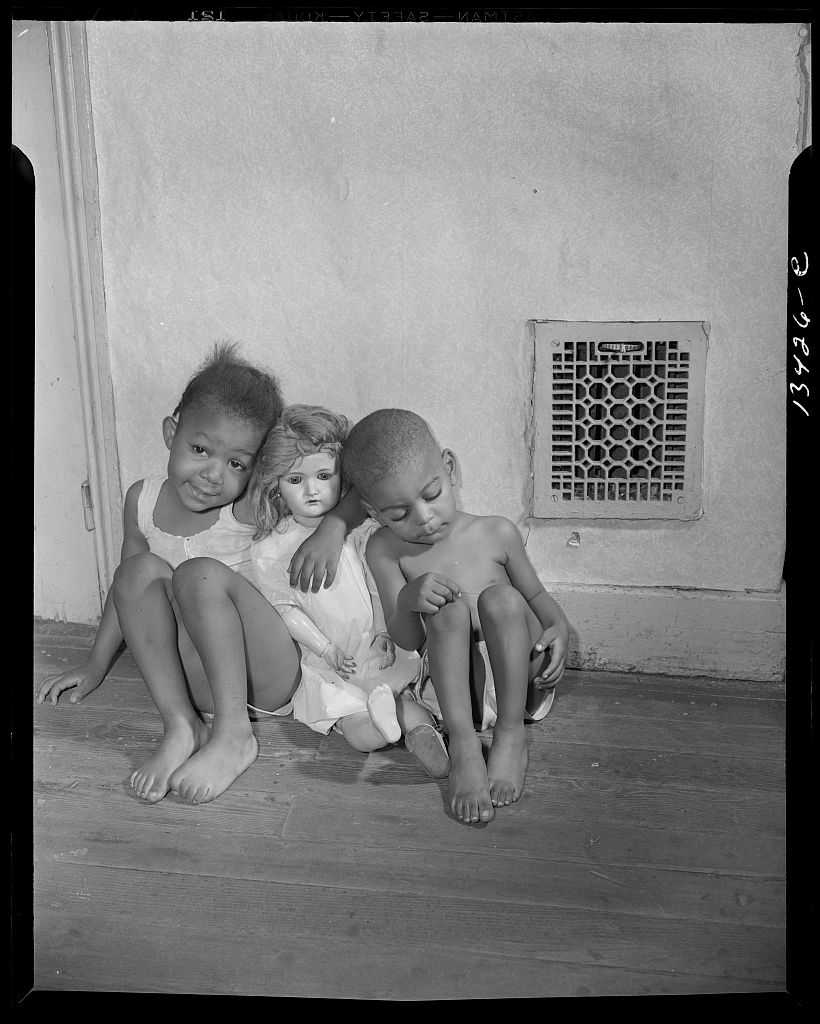
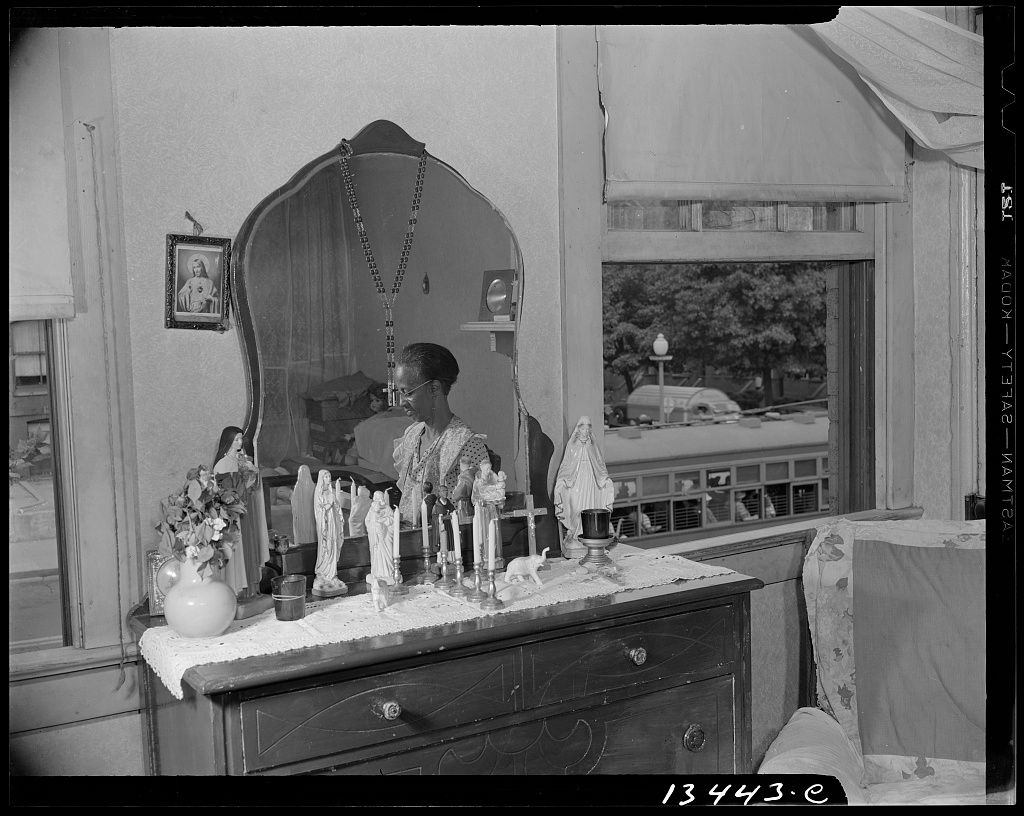
The viewpoint shifts again in the photograph of the children on the floor. A dresser and its religious objects become the subject of another frame. The Library of Congress’s account follows Parks and Watson to St. Martin’s Spiritual Church, where he made some of the series’ most intimate photographs.
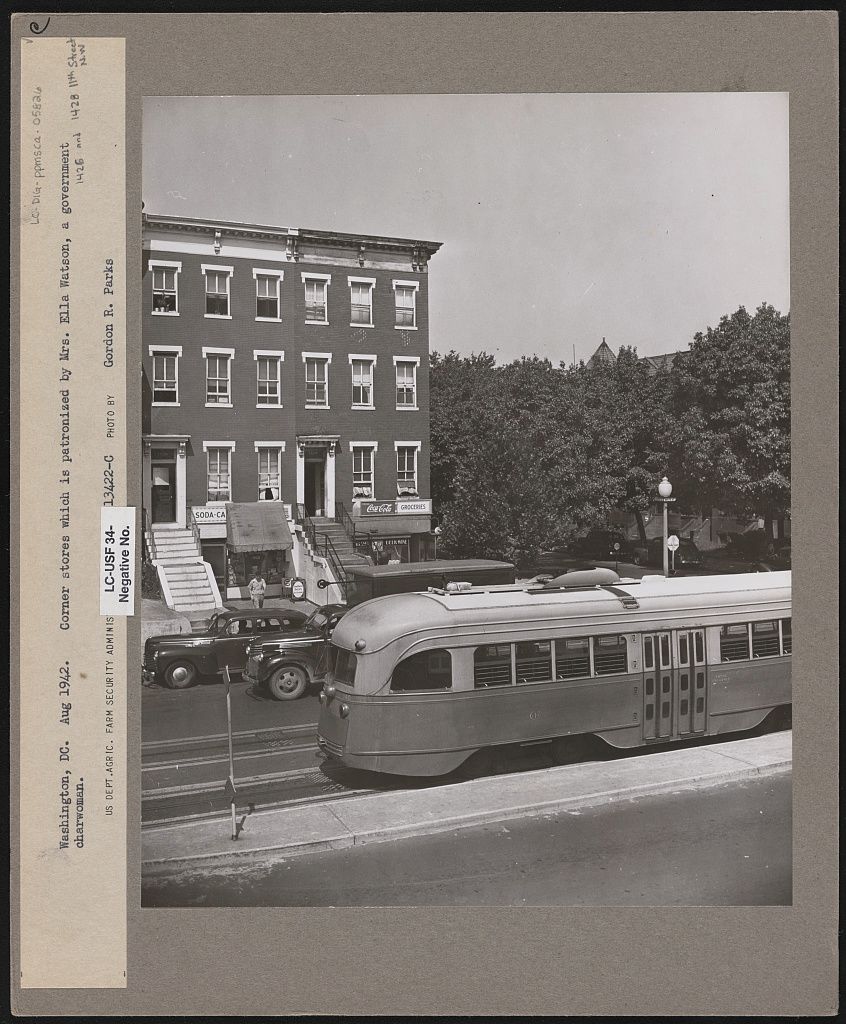
Outside a corner store Watson patronized, a streetcar takes up much of the frame. Parks had started with one woman in an office. By the time you reach this photograph, the project has made room for the streets she used and the people she lived with.
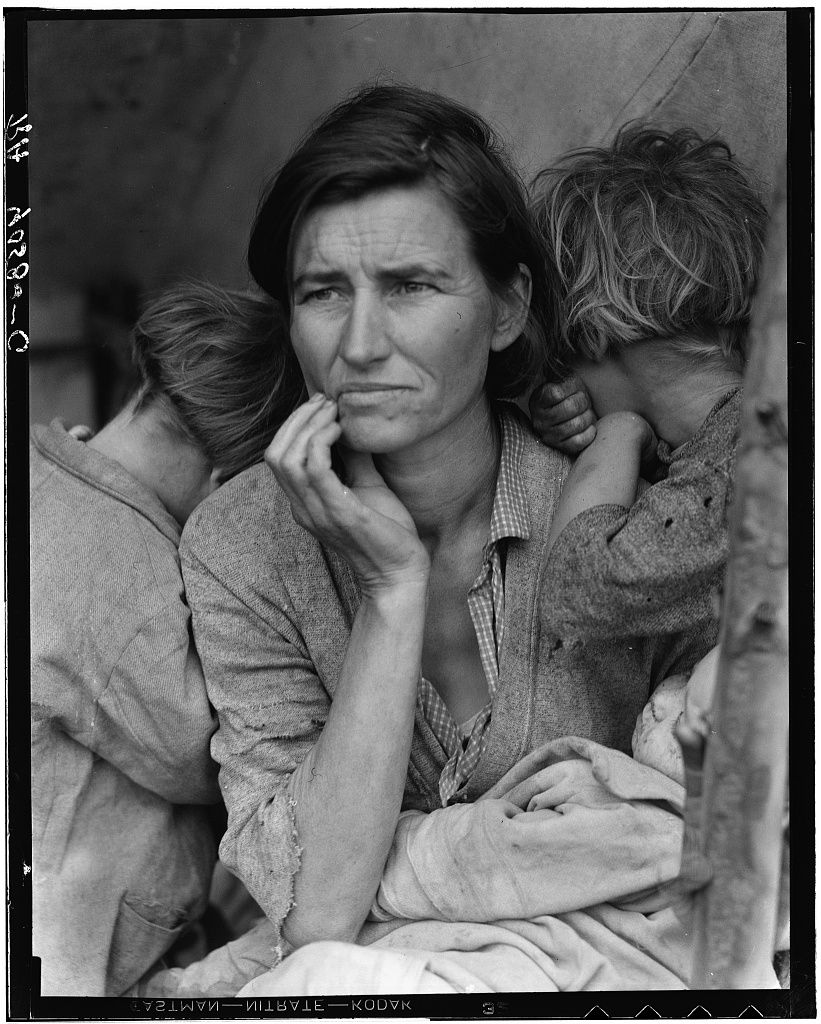
For another look at how the FSA photographs work as a series, see Migrant Mother Was Never Just One Photograph.
Explore the Gordon Parks Foundation archive and follow the Foundation on Instagram.